
SRM110 ESD Surface Resistance Tester
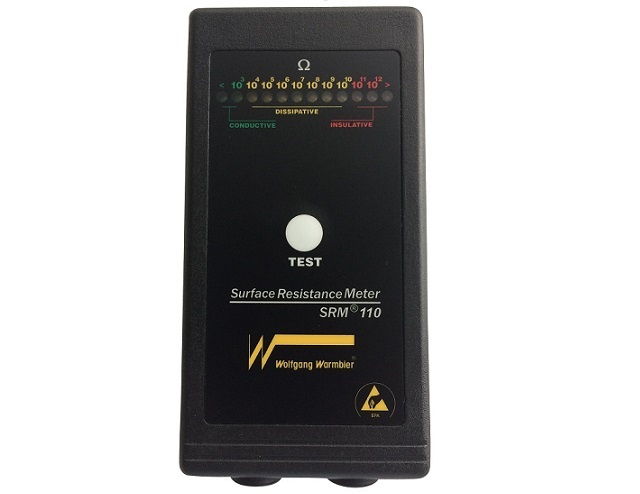
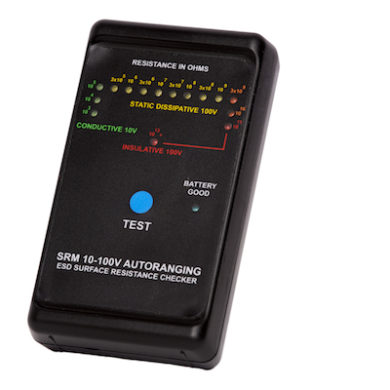
SRM110 ESD Surface Resistance Tester is a quality pocket size, robust, and lightweight surface resistance tester manufactured by Wolfgang Warmbier.
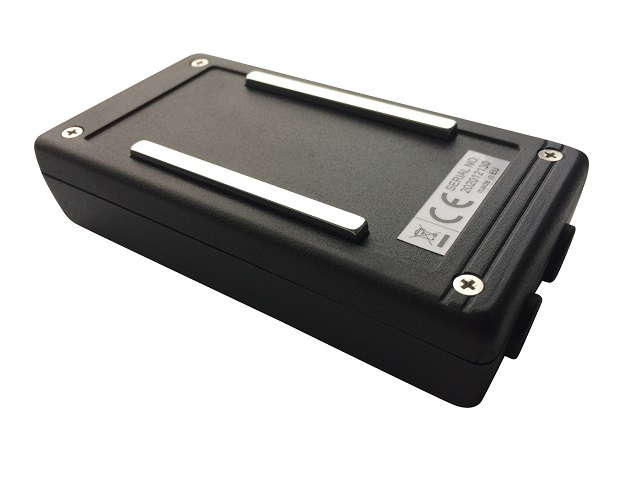
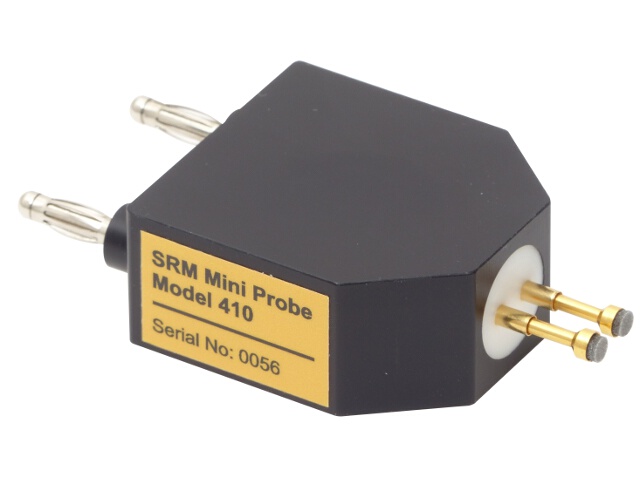
Built-in parallel solid metal bar electrodes reliably tests surface resistance and can also be used to test resistance to ground. Mini Probe 410 can be attached for measuring the surface resistance of small or uneven areas. BS EN 61340-5-1 compliant probes can be used for more accurate readings.
Includes a carry pouch, 9V battery (installed), ground cord including a small alligator clip, and a certificate of calibration. A calibration cycle of 2 years is recommended.
Browser not supported
We recommend that you use the latest version of Chrome, Edge or Firefox.
Available Options:
Technical Specification
Manufacturer Part-No.: 7100.SRM110.A
- Dimensions: 130 x 65 x 31 mm (L x B x H)
- Weight: 240 g
- Power supply: 9 V battery or NiMH rechargeable battery
- Test range: 103 – 1012 Ω
- Test voltage (open-circuit voltage): 100 V
Separate Mini Probe 410 (or two-point mini probe) can be attached for measuring the surface resistance of small, narrow, or uneven areas, where standard heavy 2.5 kg or concentric ring electrodes cannot fit or make proper contact.
4mm banana plug sockets make replacing and changing leads straight forward.
Battery
When the (>) LED flashes during measurement, it is time to replace the 9V battery. Open the back cover of the instrument by unscrewing the four screws.
Measuring Surface Resistance
To measure the surface resistance of an object, hold the instrument with the bar electrode to the surface and press the “TEST” button.
The value is indicated with 12 LED’s with a corresponding test reading between 103 – 1012 Ω, in different colours: Green = Conductive – Yellow = Dissipative – Red = Insulative
Additional Measurements
By connecting external electrodes, other measurements can also be performed, e.g. point-to-point measurement with the Miniprobe Model 410. When using external electrodes, the bar electrodes are deactivated accordingly.
Measuring Resistance to Ground
Plug in the supplied grounding cord to one socket of the instrument. The associated internal electrode is disconnected hereby.
Connect the opposite end of the grounding cord to “ground” or a “groundable point”.
Hold the instrument to the surface as described above and press the TEST button.
Please note – this instrument is not approved for measurements in explosion hazard areas & power plants.